Inline skating, commonly known as rollerblading, has numerous benefits. It is a great form of cardio exercise, it can help improve balance and coordination, and it can boost strength. What’s more, it is a convenient mode of transportation over short distances.
But benefits aside, inline skating can lead to serious injuries. According to a U.S. Consumer Product Safety Commission study, roughly 61,000 people were treated for injuries related to rollerblading in 2007.
Of these injuries, sprains were one of the most common injuries. But what exactly are they? Read on to learn more about what sprains are, how to treat them, and how you can protect yourself from getting them when rollerblading.
What is a Sprain?
A sprain is an unusual stretch or a tear in a ligament. Inline skaters are especially at risk of suffering from sprains because they are prone to falling.
While they can happen to any body joint, the ankle, knee, and wrist are the body parts most prone to them. Inline skaters are particularly susceptible to wrist sprains because they often fall and land on outstretched palms.
Symptoms
Not all sprains are the same. The symptoms depend on the severity of the sprain. Generally, there are three kinds:
- Mild sprains: Happen when the ligament is slightly stretched
- Moderate sprains: Happen when the ligament stretches and slightly tears
- Severe sprains: Happen when the ligament is completely torn
However, common symptoms include:
- Pain around the affected area
- Bruising
- Swelling
- Difficulty moving the affected joint
- Reduced flexibility
How Sprains are Diagnosed
To diagnose sprains, doctors usually conduct fairly rigorous physical exams. Some doctors may also recommend you undergo an X-ray to assess the sprain’s severity.
And if the X-ray does not reveal much, your doctor may recommend an MRI to rule out breaks or injuries to the bone.
How You Can Treat Your Sprained Wrist
If you are diagnosed with a mild or moderate wrist sprain, you can treat yourself at home using the RICE technique. The RICE technique involves four steps. They are:
- Rest: Sure, you may want to get back to skating as soon as you can, but the first step to making a full recovery is rest. When resting, try not to use the affected joint to give it time to heal.
- Ice: Swelling is a common symptom of many sprains. Ice can help to bring down the swelling and provide you with plenty of relief. Put an ice bag on the affected area for 10 to 20 minutes and set it aside for 20 to 30 minutes. Keep repeating the process every three to five hours to alleviate the pain.
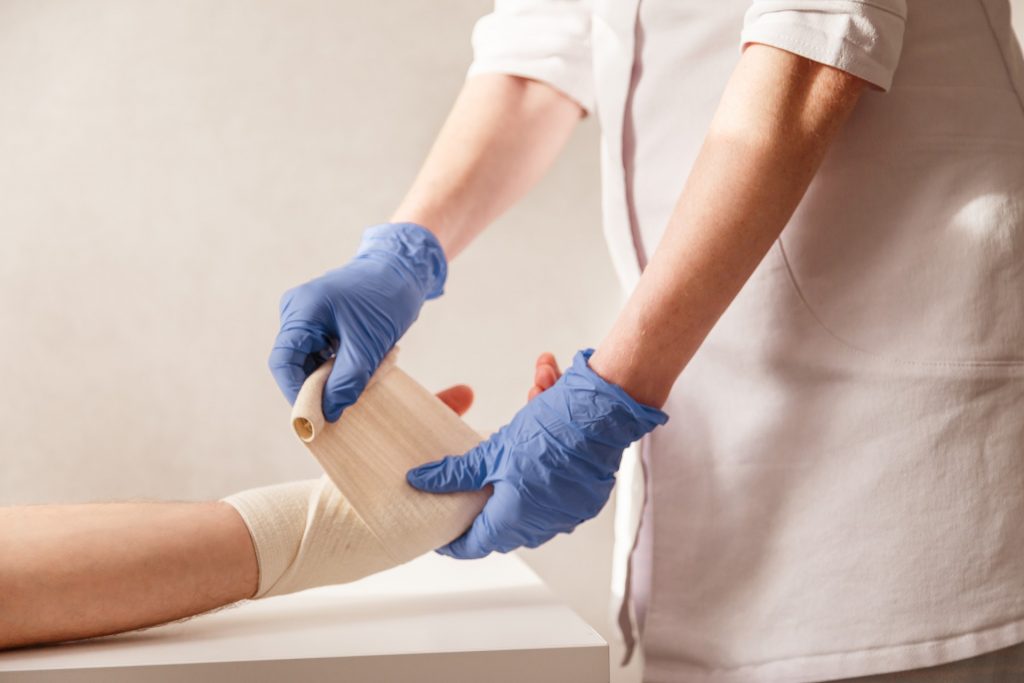
- Compression: Compression can also help to reduce swelling. Wrap your wrist in a bandage, or for even better results, get a compression sleeve. However, be careful not to wrap your wrist too tightly, or you may affect blood flow to it.
- Elevation: Finally, to reduce swelling, try to keep your wrist elevated. To do this, you can lie down and place your wrist on a pillow. Ideally, try to place your wrist above your heart level.
Adhering to RICE can provide you with plenty of comfort over the first one to three days. However, if you still feel a lot of discomfort and pain, you can consider taking anti-inflammatory painkillers such as ibuprofen and naproxen. But pain medication can lead to complications. Therefore, consult your doctor before you start taking any pain medication.
Additionally, you can also immobilize your wrist using a cast or splint. However, consult your doctor before you consider doing this.
Finally, you can try doing wrist exercises. But only do them if your doctor recommends them, as they can exacerbate your injury.
How Long Do Sprains Take to Heal?
If you adhere to the RICE technique when you have a mild wrist sprain, you should make a complete recovery within a week to a fortnight. However, if you have a moderate one, the recovery period can take one to two months. While this may sound like a long time, do not be too quick to put on your roller skates. Take the time to make a full recovery to avoid worsening your injury.
How to Prevent Wrist Sprains
Accidents are inevitable. It is nearly impossible to avoid them. But you can reduce your risk of suffering wrist sprains by doing the following things:
Put on wrist guards: If you fall, wrist guards can protect your wrists and minimize the impact of the fall.
Find safe spaces: If you are new to inline skating, find a place with a friendly surface for skating that is free from obstacles. Some suitable places include tennis courts and skating rinks.