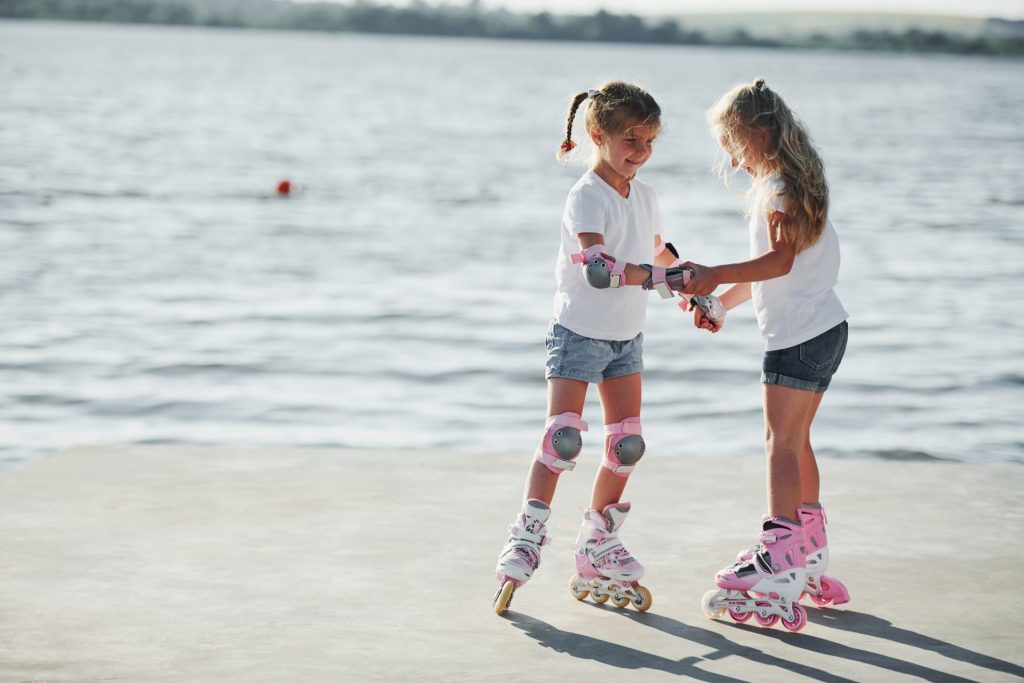
While inline skating can be a ton of fun, this is also an activity that can be dangerous at times. Even the most experienced skater can hit a rock on the road or trip over their own feet. If you fall, you’ll be thankful if you’re wearing safety gear. Otherwise, you could be faced with a broken ankle, some scraped up skin or a sprained wrist. Not only do you need to have the proper safety gear when you go inline skating, but you need to be properly wearing it. Let’s take a look at some of the specifics of safety gear for inline skating.
Type of Safety Gear You Need for Inline Skating
There are a few different safety gear items that you need to have on hand when you’re going to go inline skating. While a helmet is one of those items, that helmet isn’t going to protect enough of your body.
Wrist Guards
A wrist guard slides over your thumb and onto your wrist. There is likely Velcro or some other fastener that you can use to tighten the guard around your wrist. If you have your wrist protected and fall, your wrist won’t bend in a way that would result in it becoming sprained or broken. You can also protect your hands, as it’s an instinct to put out your hands when you’re falling. A lot of people end up with some pretty bad road rash on this area of their body when they’re not wearing safety gear.
Knee Pads
Knee pads slide over your foot and onto your leg. You tighten them when they are around your knee area. Another common area that you may fall on is your knees, and you could be left with some pretty nasty wounds if you’re not careful. Knee pads are comfortable, and they still allow you to bend your knee while wearing them.
Elbow Pads
Protecting your elbow with a hard pad can prevent you from experiencing a break in your elbow or nearby bone. They’re similar to knee pads, but add a layer of protection to your elbows.
Helmet
A helmet provides protection to your head from the inside and outside. If you were to fall or be hit, the outside of the helmet would hit the road or whatever else is nearby. That eliminates your head and skull being the first line of defense. The inside of a good quality helmet has padding that will protect your head upon impact. Brain injury and even death can be avoided if you’re wearing your helmet while skating. Make sure that the strap around your chin is tightened so the helmet doesn’t move around on your head too much. A lot of helmets have an expiration date, so monitor that date so you know when you to buy a new one.
The Quality of Your Safety Gear
Invest in a good quality set of safety gear. Trying to save a few dollars isn’t worth it when it comes to your safety. Also, make sure that you’re routinely inspecting your safety gear to ensure that it’s in good condition. Check to see if any of the padding or hard protective areas are starting to peel off. Velcro and fasteners should still be securely working. If you notice that anything is wrong with your safety gear, swap it out for a new set. If you have a child that is inline skating, make sure you inspect their safety gear for them. You should also be checking your inline skates for any sign of damage or wear.
Beyond Safety Gear
You should be strapped into all your safety gear before you head out, but make sure that you’re following all the rules of road as well. You still need to watch out for stop signs, traffic signals, etc. There will likely be cars driving in the area where you’re skating, so you need to watch out for them as well. Don’t assume that they’re going to see you or know what to do when you’re in their space. If possible, stick to sidewalks.
Turn Off the Tunes
It’s tempting to listen to music while you’re inline skating, but there may be some locations where that isn’t the safest option. If your music is too loud or distracting, this can cause you to miss a car that’s honking its horn at you. You may not hear a vehicle coming up behind you.
Stay in the Light
Stick to inline skating during the day. Not only does this make you more visible to vehicles and people, but you’ll be able to see the road surface better. There could be a stick or rock in the road that you can’t see because of the darkness. In daylight, that same terrain wouldn’t be a problem because you can avoid all kinds of debris.
Check Your Speed
When you’re inline skating, you can end up building up some speed. While this is fun, you shouldn’t be going any faster than you can stay in control. Bring your speed down using the brake on your inline skates. Stay away from large hills, especially if they are near busy roads where you can’t predict the flow of traffic going through. If you’re new to inline skating, make sure that you master the use of your brake before you head out on the open road. You never know when you might need to stop yourself.
As you skate more and more, your skill level is going to change. While you may be able to take on more challenging terrains, you should always wear your safety gear. Even the most experienced skater should wear safety gear to protect the various parts of their body that are most susceptible to injury.