Hockey is a team sport in which two teams try to outscore each other. Players maneuver a ball (or puck) using a hockey stick and try to get it into the opposing team’s goal. Variants of the sport include field, ice, street and roller inline hockey. In this post, we will explore the latter sport, also known as inline hockey.
What is Roller-inline Hockey?
It is a type of hockey played on a tough and silky surface. The players use inline skates to skate on the surface. It pits two teams of five players each against each other. Generally, teams consist of 16 players each.
Roller inline hockey is a high-speed and fluid sport. This is because of its rules that promote offense. Unlike ice hockey, there are no blue lines in inline roller hockey. As a result, there are no offsides during gameplay, encouraging fast-paced gameplay.
It is divided into two 20-minute halves or four quarters of 10 minutes each.
The sport is governed by two different unions – the International Ice Hockey Federation and World Skate. The latter union organizes the sport’s most popular tournament – the Inline Hockey World Championship that is held annually.
In the United States, the sport is governed by the USA Roller Sports (USARS).
The Basics of Inline Skating
Now that you know the basics of roller inline hockey let us examine the basics of inline skating.
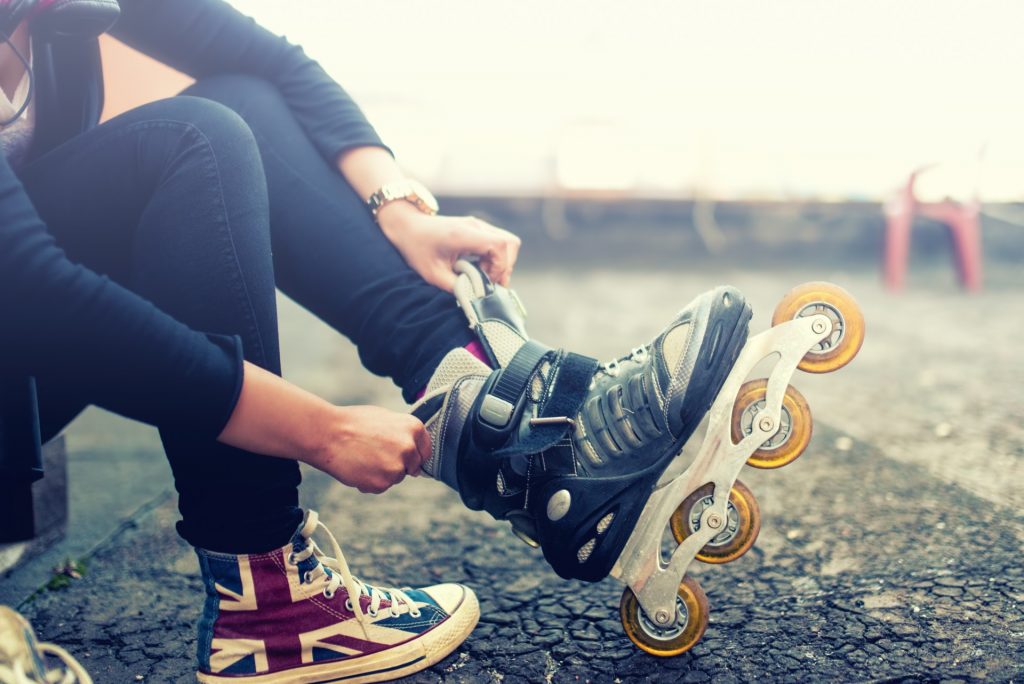
Inline skating is an excellent form of exercise and recreation. If you are new to it, here are some important basics you should know before you put on your inline skates.
What is inline skating?
It is a sport that involves a wide range of activities done using inline skates. Popularly known as rollerblading (thanks to the roller skate brand that popularized it), inline skating was incredibly popular in the 90s before its popularity started to wane. However, inline skating is undergoing a renaissance at the moment. Are you interested in joining the bandwagon of other enthusiastic skaters? Here are some important basics you need to know.
Get Protective Gear
If you are new to inline skating, safety should be your first priority. Like many other sports, inline skating has its risks. Skaters are prone to falling and suffering injuries. Injury-prone areas include the wrists, knees and elbows. To protect these areas, ensure you get wrist, knee and elbow pads. In the event you fall, they will reduce the impact of your fall.
Additionally, consider getting a helmet. While head injuries are less common than injuries to the areas mentioned above, they can be more severe. A helmet will protect your head, and it can save you from getting a fatal injury. And if you already have a bicycle helmet, do not splurge on another helmet. You can use it when you are skating too.
Get Appropriate Rollerblades
After you have bought safety gear, you will need a decent pair of skates. While there are a variety of options available, ensure you pick skates that fit firmly. Not only can skates that fit you firmly reduce your risk of falling, but they can also improve your ride quality too. As a rule of thumb, you should spend at least $100. But if you cannot spend that much, consider renting a pair of good skates rather than buying cheap substandard ones.
Find a Beginner Friendly Surface
Once you get appropriate gear, do not be too quick to hit the pavement. Look for a skate friendly surface that will provide you with a good grip and help you hone your skating skills. For starters, try grass.
Learn Appropriate Postures
Inline skating can feel daunting at first. To help you gain confidence, learn how to maintain balance. While it may feel unnatural at first, try bending your knees for better stability. Bending your knees will lower your center of gravity and improve your balance. Please resist the urge to stand upright as it will cause you to lose balance.
Learn Basic Turns
As you advance your skating skills and skate on more challenging surfaces, aim to learn how to turn. Turning can help you avoid obstacles that can make you fall. While there are several turns, start with the simple A-frame turn. Once you master the A-frame turn, you can learn more complex turns like the parallel turn and the efficient crossover turn that is popular in professional hockey.
Learn How to Brake
Like turning, there are a variety of ways to brake. If you are learning how to skate, start with the basic heel brake. Once you can comfortably do the heel brake, try out the more complex T-stop. And if you master the T-stop and feel adventurous, you can try out the even more complex edge stop done by pro hockey players.
When learning how to brake, start on grass. Once you conquer grass, try out a more challenging surface like a parking lot free from obstacles. However, until you master braking, do not try to skate down surfaces that go downhill to avoid seriously injuring yourself.
Final Word
If you are new to inline skating, it can feel intimidating when you put on your blades for the first time. You may struggle to balance, and you may fear you will tip over and fall at any moment. Plus, you may fear getting seriously injured. But do not fret. With time and practice, you will get the hang of it. Sure, you may fall and stumble while learning, but keep practicing. Also, ensure you get protective gear to protect yourself from serious harm.
And if you are generally a gifted athlete, but you just aren’t getting the hang of inline skating, do not be too hard on yourself. You will not become a pro in a day. So, try to learn the basics first. Once you learn them, you will become fairly good, and you will gain the confidence to learn more advanced moves.
And best of all? When you master inline skating, you will kill two birds with one stone – you will have fun while exercising too!