
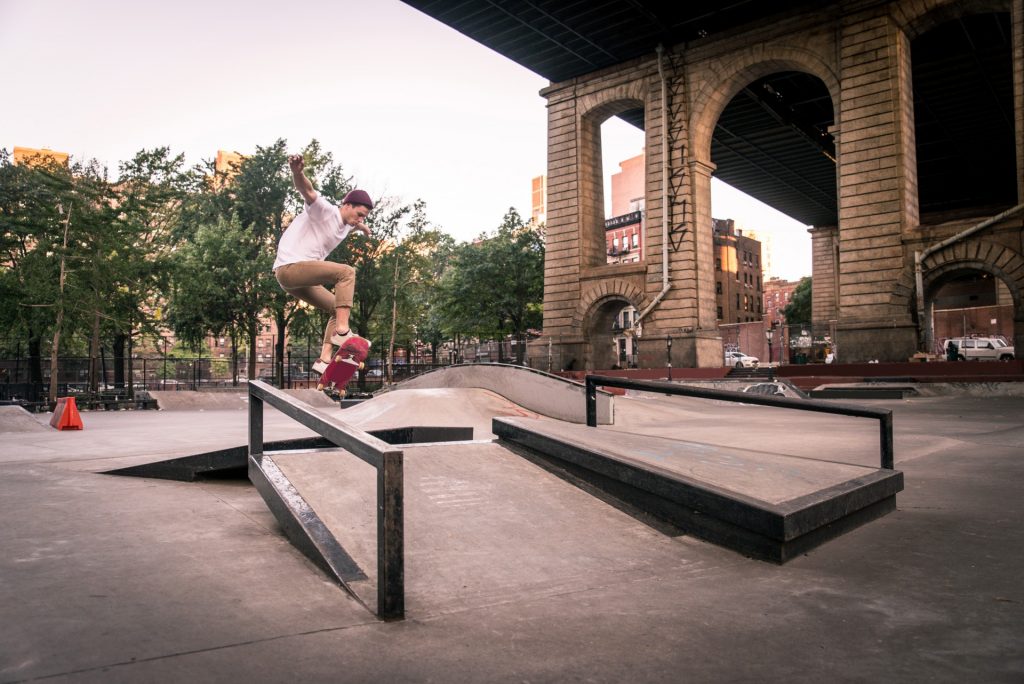
Vert skating, also referred to as vertical skating, is a type of inline skating that is more violent than others. Skaters perform this sport on a specially made skating ramp, known as a vertical ramp. It has around 6-24 inches of vertical parts on each side of the pipe.
The participants achieve more air-time than people performing other types of inline skating. Therefore, if you participate in inline vert skating, you can perform a lot of complicated acrobatic moves and tricks like flips and spins.
Because of its complexity, you need to have a particular set of skills to participate in inline vert skating. Your intention as an inline vert participant is to gather enough speed such that you are above the ramps, edge to perform some of the spins and flips.
For the sport, you begin in a horizontal position at the foot of the pool or ramp and push yourself from side to side in the ramp until you gain enough speed to be in a vertical position, above the edge, to perform your tricks.
When you do it as a sport, you are given a minute to impress the judges by performing and landing several difficult tricks, having good flow and consistency, having a good style and creativity of your styles. Landing is also an important part of the sport, as it scores you more points.
For inline vert skating, you can use either roller skates or inline skates, but a lot of skaters prefer inline skates. These come with 2-5 wheels, all in a single line. If you buy inline skates for recreation, they come with a rubber break or stop block at the back of one or both of the skates.
That helps you slow down or break by leaning back on the side that has the brake block. Since vert skating is an aggressive type of inline skating, the wheels of the inline skates range between 44-72 mm. That helps provide more stability for you as you perform the complicated maneuvers.
Inline Vert Skating History
Inline vert skating dates back to the mid-1970 from pool riding, which people did in backyard pools. That involved surfers who practiced pool skating to stimulate wave-riding on land. The surfers would ride up and over the swimming pool edges to catch air.
From the backyard pools, inline vert skating progressed to skate parks, which would include bowls, pools, and vert ramps like quarter pipes and half pipes.
As inline vert skating became popular, people started practicing and incorporating their tricks and maneuvers specific to vert skating. The popularity grew, and eventually, people introduced vert skating into events and competitions like Maloof Money Cup and X Games.
Some of the most iconic vert skaters include Tony Hawk and Steve Caballero. However, in 2008, X Games and ESPN organizers removed inline vert skating from competitions. They replaced it with free-movement skate-park-style.
In that style of skating, skaters would still perform vert skating tricks, but together with some other street skateboarding elements. However, after some time, that announcement faced a lot of condemnation from some pro vert skaters like Tony Hawk and Bob Burnquist.
That saw the reinstatement of inline vert skating in competitions. In 2011, however, ESPN stated that X Games would not feature women’s vert skating events. They justified their decision because there was no growing participant base and established competition schedules.
As the years go by, it has become more and more difficult for vert skaters to find public vert ramps, which is making it harder and harder for practice. That is contributing to the slow but steady death of the sport.
Indoor Vert Skating Vs. Outdoor Vert Skating
Most of us who are not so into skating assume that skating is the same, regardless of where it is done. However, if you are a skater, you understand that there are some differences between indoor and outdoor skating.
Everyone has a preference, but they both have their pros and cons
Indoor vert skating pros
• Safe to skate at any time of the day
• High-quality rails and ramps
• Clean and well-maintained
Cons
• It might be crowded, making it hard to perform certain tricks, or you might have to wait a long time before it’s your turn.
• Hard to find
• More costly
Outdoor vert skating pros
• You do not have to wait to skate because the areas are not crowded or are big enough
• You do not have to pay for anything
• Easy to meet your friends
Cons
• Hard to skate at night because dim light could result in accidents
• It might not be as clean or well-maintained as indoor vert skating areas
How To Start Vert Skating
With the continuous decline of public access to vert ramps, vert skating seems like it won’t be around for long. However, you might live in a community with a lot of vert skaters, and you might want to try your luck in the sport.
Some of the things you need to do to get started include:
• Find a vert ramp- Locate a vert ramp around where you live, whether public or private. Also, ensure that there are professional vert skating trainers because the sport requires a lot of skill to master.
• Buy safety gear- Safety is paramount in this sport because of the complicated tricks you have to perform. Therefore, you have to buy a helmet, elbow pads, knee pads, and wrist guards.
• Learn how to skate from one side of the ramp floor to the other to gather speed- This is the first thing you have to learn before skating up the ramps.
• Learn how to fall- Falling is a must if you are learning how to skate. Therefore, you have to learn how to do it safely. Falling on your knees is the safest way, and as you learn, it becomes fun and more comfortable with time.
• Learn how to drop in- Dropping in is the skill where you stand on top of one side of the ramp, where your skateboard hangs over, and you have to shift your weight slowly until you skate down the ramp and up on the other side.
One of the most important things with inline skateboarding is that you have to be patient and consistent with training before you become a pro.