What is Freestyle Inline Skating
Freestyle skating is not only a recreational sport but also a competitive sport that is recognized internationally by the International Federation for Roller Sports and also the National Italian Olympic Committee. This type of skating groups different styles of skating to include:
- Style Slalom
- Speed Slalom
- Roller Cross
- Free jump
- High jump
To practice freestyle skating, athletes and skaters will use inline skates called recreational, aggressive, or street (urban). This type of skate consists of a shoe, metal frame, and four inline wheels (56 mm to 80 mm in diameter).
Best Type of Inline Skates for Freestyle
There are various types of inline skates on the market. Each one has its benefits and purpose for different styles of skating. Types of skates include:
- Recreational
- Fitness
- Roller Hockey
- Racing
- Aggressive
- Urban/Street Skate
For freestyle skating, skaters can use a variety of skates. Generally, for starting out, recreational inline skates are a good choice. For more advanced skaters, aggressive or urban skates will be the best choice. Below we have listed these skate types to learn more about them and their specifications.
Recreational
Of the inline skates listed above, the most popular type for beginners is the recreational inline skate. These skates are designed for anyone looking to go out and enjoy inline skating, either for the very first time or the hundredth.
Recreational skates are great for beginners because you can literally strap them on and take off. With these skates, you can get in a quick skate around the neighborhood, hit a trail, or hit the city sidewalks. Recreational skates come in a variety of models for all levels of skaters.
A recreational skate generally has a soft boot construction with a closure system (standard lacing, ratchet, power-assisted). Features will vary from skate to skate, but most all have support and padding. Breathable reinforced mesh and cloth with hard plastic cuffs will be the primary makeup of most recreational skates.
As a skater progresses in their skill, they will want to upgrade to a the below because recreational skates do not offer the frame and construction for jumps, tricks, etc.
Aggressive Skates
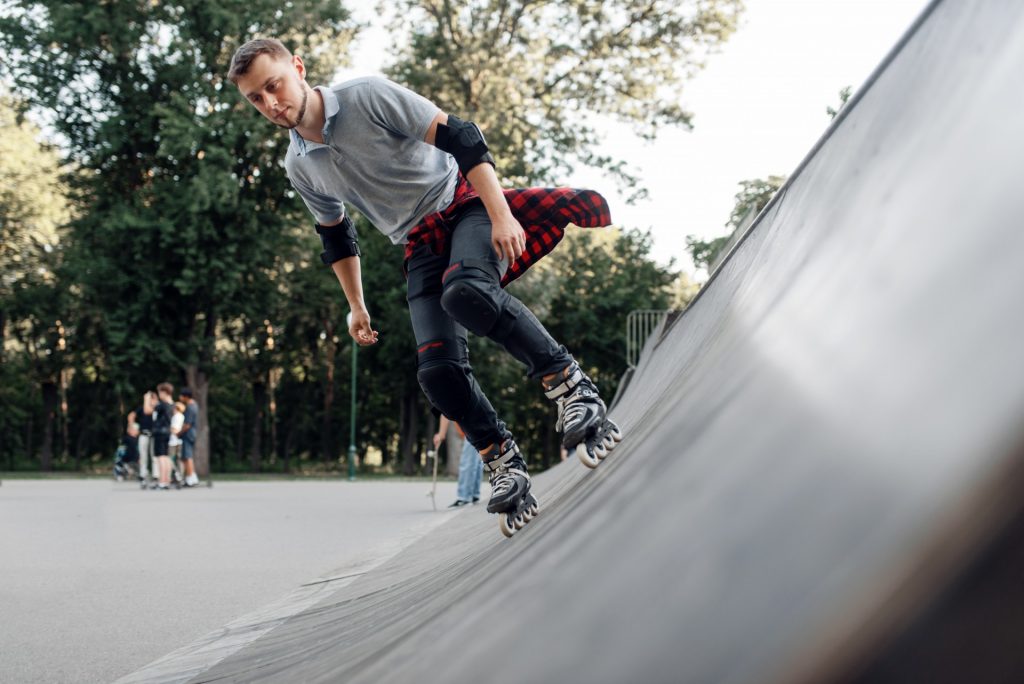
This type of skate is modified for tricks, jumps, sliding, and grinding. The wheels are mostly kept under 60 mm, giving the skate a low center of gravity. However, with smaller wheels comes slower speeds, so some prefer wheels that are 80 mm. Aggressive skates are typically made of hard plastic with higher-end models made of carbon fiber.
Aggressive skates come in three types: soft shell, hard shell, and skeletal shell. Unlike recreational, these skates can have their liners changed out and come with either an anti-rocker or flat frame. With more advanced skating and skills, the bearings in the skate will need to be maintained regularly. Bearings need to be greased often, unless they are ceramic, which is self-lubricating.
Street/Urban Skates
Over the years, a new skate type emerged onto the skating scene that has gained popularity. This skate was aptly named the urban or street skate. These skates are essentially a hybrid of a recreational and aggressive style skate. An urban skate gives a look and feel of an aggressive style skate but has the functionality of a recreational skate.
Urban skates have a wheel and bearing setup (wheels 82mm or larger) with a boot design that is capable of tricks and jumps. To help with faster corning, the skate frame is shortened to allow for the speed of the larger wheels. An urban skate comes with a brake system that will need to be attached before skating.
Where Can You Freestyle Inline Skate?
Freestyle skating is often practiced on concrete or in a skate park, along with colored cones (10 to 20). Cones will be arranged in either a straight line or a particular pattern. Often the skating is done to music. You will often see freestyle skating in the city on trails and in parks.
Fitness Benefits of Freestyle Inline Skating
Aggressive style The sport of skating, whether regular or inline, is recognized by doctors as physical activity closer to swimming. Skating increases orientation in space, agility, endurance and helps maintain an upright posture.
All inline skating provides a full-body workout. With any skating, it is important to always warm up properly to avoid injuries. Also, safety equipment should be worn at all times. Basic safety equipment includes a helmet and padding for the elbows and knees.
Rolling into the Future
Freestyle skating, also known as aggressive skating, became massively popular in the mid-nineties all over the world. Skating pioneers like Arlo Eisenburg, Jon Julio, and AJ Jackson performed freestyle tricks and stunts in the streets that sent an excited ripple through the skating world. Freestyle inline skating grew to be the fastest-growing participant sport across the globe.
As the sport grew and developed, so did the tricks and stunts. Tricks became more technical and grind-based. The soul plates on skates got bigger for grind tricks on rails and ledges, and wheels got smaller for more stability. As for comfort, skate liners were improved and now give the skater protection and greater control.
Although the initial inline skating ‘boom’ in the nineties settled down in the 2000s, it has seen a rebirth in recent years. The industry of skate gear continues to grow and provide skaters with skates and equipment that some back in the day could have only dreamed of skating with. What are you waiting for? Grab your skates and your Walkman, and get out there!