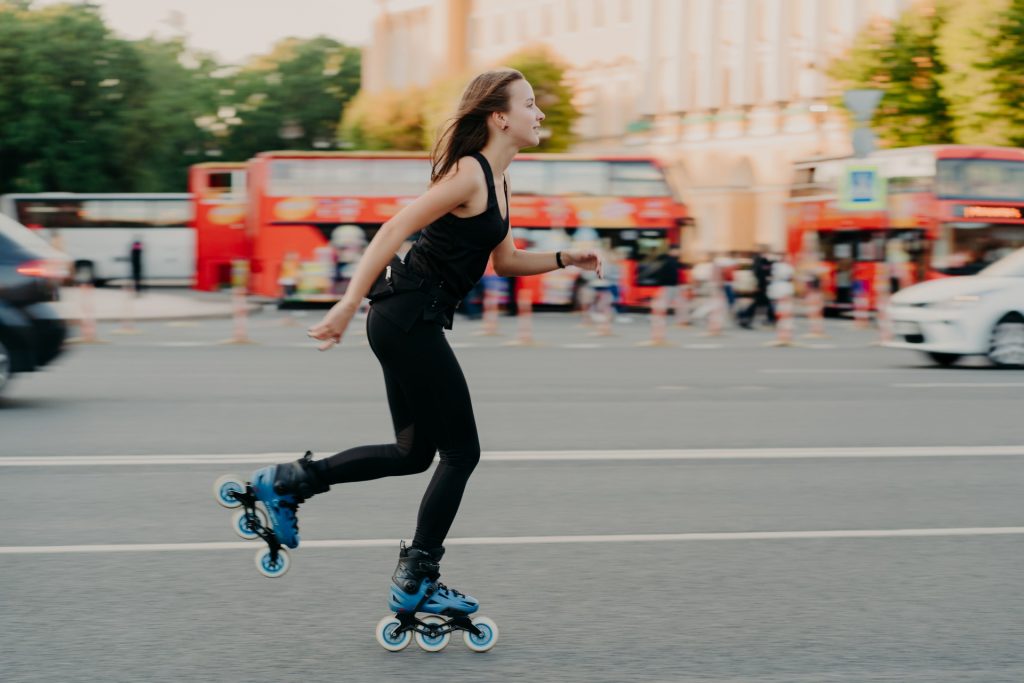
Nordic inline skating is a great way to get in a full-body workout. By combining modern inline skating with cross country skiing, this sport engages the upper and lower body as well as the cardiovascular system, making it a great endurance and strength exercise.
Below we will discuss general information about Nordic inline skating along with what equipment is needed, basic techniques, and general safety information.
What is Nordic Inline Skating?
Nordic inline skates are designed for offroad use with poles that provide momentum and stability. You can skate in all weather conditions and across different terrains. To learn the basics as well as special skating techniques, you can go to a skate school. This can be helpful, especially if you are going to utilize the sport for fitness.
Skates should be comfortable yet fit snuggly with padding in the ankle area feeling supportive and anatomically placed. Skates that are equipped with a brake system can be used for paved road traffic in most areas.
Nordic inline skates can come with either plastic or pneumatic tires. Plastic wheels will limit a skater to wide asphalt streets. As for pneumatic tires, skating can be done off-road.
Nordic inline skating is often called Nordic cross skating and is considered a cross-country skiing variant in the summer. With the use of poles, this type of skating requires several other pieces of equipment for protection and safety. Continue reading below to learn more.
Equipment Needed for Nordic Inline Skating
Inline skates and poles will be the basic equipment you will need to start. Other pieces of equipment you need will include:
- Helmet
- Elbow and knee pads
- Padded shorts/crash pads
- Gloves (Nordic)
Clothing for Nordic inline skating should suit the weather conditions. Functional outerwear is quite popular and can be found in most sporting goods stores.
Poles
Poles for Nordic inline skating should be the appropriate length for your body length. To find this measurement, you can put the poles in front of you upright while wearing your skates. The top of the pole’s handle should be level with your chin. Also, your physical condition, skating skills, and length of arms and legs should be considered too when measuring for poles.
To note: Poles have tips and will need to be replaced regularly. When tips are worn out or blunt, it will cause slippage while skating.
Bearings
Bearings are the heart of Nordic inline skates. When determining if bearings are of good quality, they will be rated by the Annular Bearing Engineering Committee (ABEC). The rating of the bearing pertains to the tolerance and accuracy of the bearing. Ratings are listed as 1, 3, 5, 7, with 7 being the highest quality rating given for a bearing.
It is important to note that for bearings to work properly, they must be greased sufficiently. A well-greased ABEC 1 bearing will outperform an ABEC 7 rated bearing that is not greased enough.
Bearings come in various materials, with quality bearings being made from chrome steel. Other materials include titanium or ceramic. Ceramic bearings are self-lubricating and do not need to be greased. If you hear noise or heavy spinning of the bearings, it will be time to maintain or replace them.
How to Get Started
Nordic inline skating is not hard to learn. It is advised that skate lessons are an optimal choice when starting. If you choose to learn independently, give yourself patience and time to pick up the techniques. When learning how to skate, find an empty parking lot or paved area where practice will be safe. You may even want a friend to come along to keep an eye out for you.
The first technique you’ll want to learn is the position in which to skate. Bend the knees to allow for lowering your center of gravity. Lean forward slightly at the waist to find your balance. Your center of gravity should be above the center of your skates.
With this position achieved, it will time to take the first stride in your skates. Starting with your right skate, push out and slightly back, then circling the right skate around and back under you. You will do the same with the left skate. Each push out and back will have you skating forward in no time.
To turn left or right, your weight will need to be shifted to your turning direction. So if you want to turn right, then your weight on the right side will need to go in that direction. To do this, have your legs parallel and shoulder-width apart and point your knees and toes in the direction you are going.
To stop yourself while skating, your upper body will need to be in a mostly upright position with your skates hip-width apart. With knees slightly bent, apply pressure to your braking system.
To note, skates need to be in a staggered position (about one shoe length) to allow for more stability. Poles should be lifted and loose but can be used to help you gain balance upon stopping. Once you have the hang of the basic skating techniques, you can move on to more advanced techniques such as the double push, diagonal, arm swing, or ice step.
General Safety Information for Nordic Inline Skating
- When skating, be aware of your surroundings and people. Being self-aware will decrease dangers and accidents.
- Know where skating is and is not allowed. Some roads and paved trails do not allow inline skating with poles.
- For your safety, check your equipment each time before heading out.
- Always wear proper safety gear and protection.